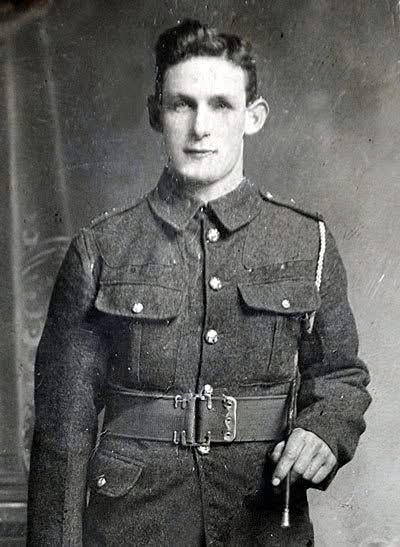
William was born on 3 March 1885 in Gates End, Ballymoney, County Antrim. The son of John Adams, a hardworking laborer, and Sarah Jane Workman, William was one of twelve children.
Around 1890, his family moved to Belfast, settling at 1 Cassidy Terrace in Victoria Ward. In the bustling heart of Belfast, William grew up amid the challenges of a large family, learning early on the values of resilience and loyalty that would shape him throughout his life.
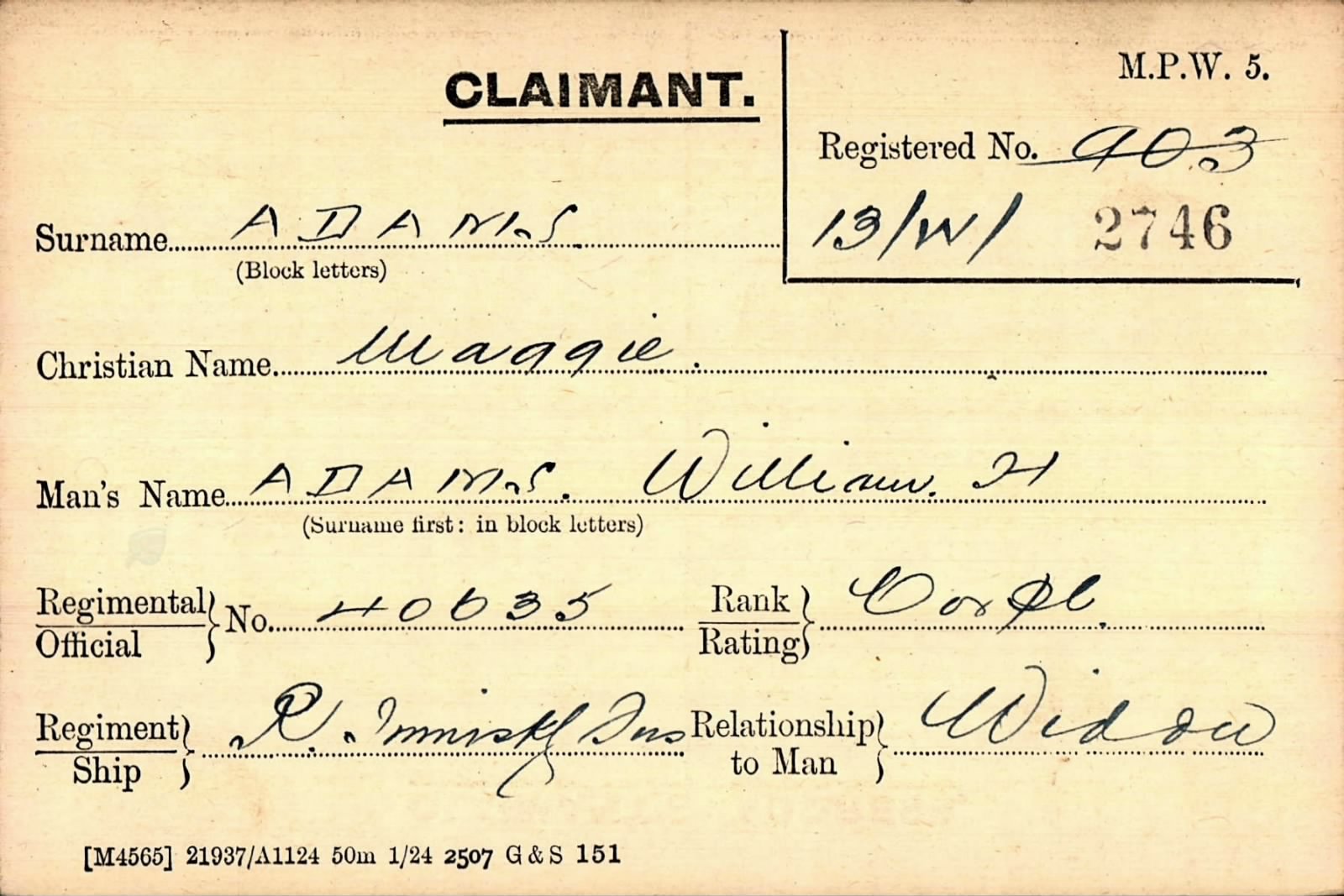
On 25 November 1908, he married Maggie Wilson Ross, a factory worker from Coleraine. Together, they built a life on Brook Street in Coleraine, welcoming four children: William in 1909, Margaret Jane in 1915, Esther Blair in 1916, and Mathew, the youngest. William worked as a coachman, providing for his family and offering his children the stability and care he knew from his own family.
In June or July of 1915, driven by a sense of duty and a desire to serve, William enlisted in the North Irish Horse at Antrim. By the end of December 1916, he was one of forty North Irish Horsemen transferred to the Royal Inniskilling Fusiliers, where he joined ‘B’ Company of the 10th Battalion.
On January 9, 1917, they embarked for France and soon found themselves in the thick of action, stationed at Ploegsteert Wood. Life on the Western Front was a world apart from Belfast. As a seasoned coachman, William was used to the everyday strains of physical work, but the relentless artillery and constant threat in the trenches posed a different test.
By 7 April 1917, the unit had left the relative safety of Wakefield Huts near Locre, moving closer to the front. Their new post in the Brigade Reserve at Kemmel placed them within earshot of the ceaseless artillery exchanges along the Spanbroek sector, an area marked by jagged shell craters and ruined earth.
The tension was palpable, as the soldiers knew that every day brought the possibility of an enemy attack—or a relentless bombardment from the German guns.
On April 18, an entry from the battalion’s war diary captured a haunting moment of humanity amid the carnage:
“Enemy artillery etc. very quiet in the Battalion sector towards nightfall. A German was seen coming across No Man’s Land, running from one shell hole to another, apparently giving himself up as a prisoner. Unluckily, a trench mortar NCO fired at him and seemingly wounded him, so he began to run back to his own wire again. Before he reached his own wire, some of the Battalion fired, and he fell. At 9:30, a patrol went out to find him, but he had been taken in.”
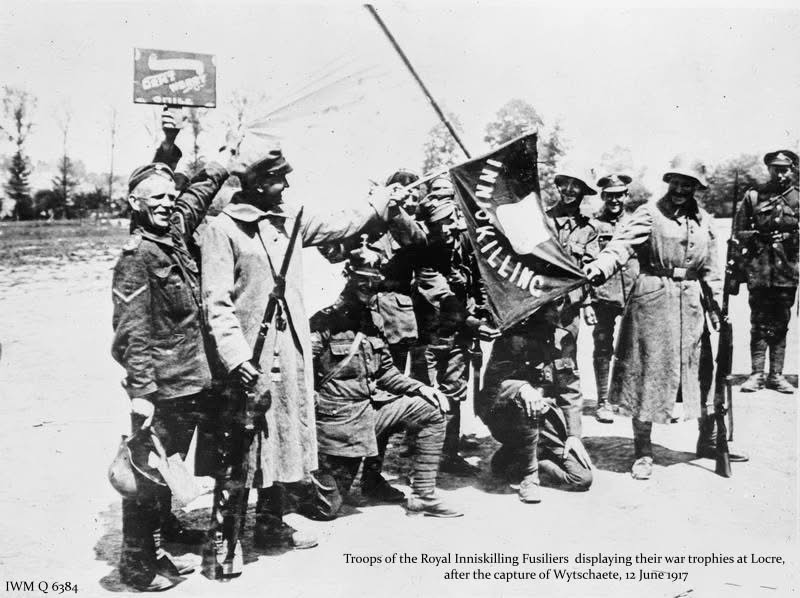
William had faced many trials on the front, but none quite like the attack on Wytschaete on 7 June 1917.
In the early hours, amid the thunderous detonation of mines beneath the enemy lines, William and his comrades surged forward, seizing the shattered ridges from German forces. Surviving the intense shelling and hand-to-hand combat, he emerged from the ordeal physically intact but deeply marked by the sights and losses of that day.
After the battle, the battalion withdrew to the quieter countryside near Winnezeele, France, where they rested, gathered reinforcements, and braced for the long struggle ahead.
By July 31, they were back at the frontline staging ground of Hiphoek, near Poperinghe, just as the Third Battle of Ypres commenced.
On August 7, the battalion was ordered to move through the small village of Vlamertinghe, then onward to Wieltje, near the devastated town of Ypres. Here, they took over the support line from the 15th Battalion, Royal Irish Rifles.
As they filed into position, enemy artillery unleashed a brutal barrage. Mustard gas shells burst among the lines, emitting thick, yellow vapors that clung to the men’s skin and clothing.
One of William’s companies was hit particularly hard, with 20 soldiers quickly overcome by the gas. Despite their training and gas masks, the silent, seeping poison struck fear into all. For William and the others, every breath was a gamble, and the agonized cries of those affected would haunt them as they waited for the shelling to subside.
In the cold, damp darkness, William must have realized that the fight here was not only against the enemy across No Man’s Land but against the land itself and the invisible dangers it held.
Each day, he knew, demanded a resilience not just to survive but to bear witness to the unrelenting weight of war.
On 8 August 1917, during the early days of the Third Battle of Ypres, the reality of war struck with full force. The battalion was subjected to relentless shelling, as detailed in the war diary:
“The enemy at intervals shelled the front line & supports … The shells are mostly H.E. of large calibre, with a good few shrapnel and armour piercing shells. The total casualties, including last night’s are:- 2 Other Ranks killed, 24 O.Rs. gassed, and 18 O.Rs. wounded. ‘B’ Company suffered very heavily in casualties.”
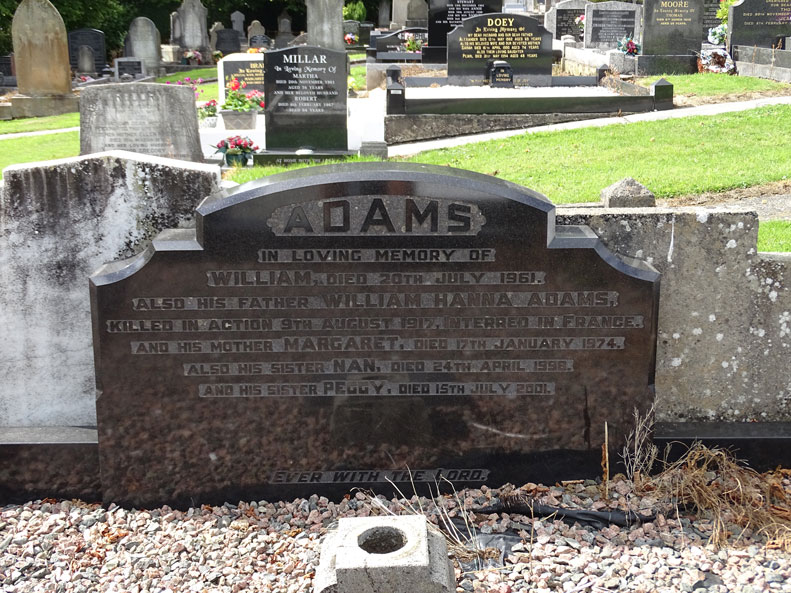
In this brutal onslaught, William was killed in action and disappeared in the landscape , his body never to be found again.
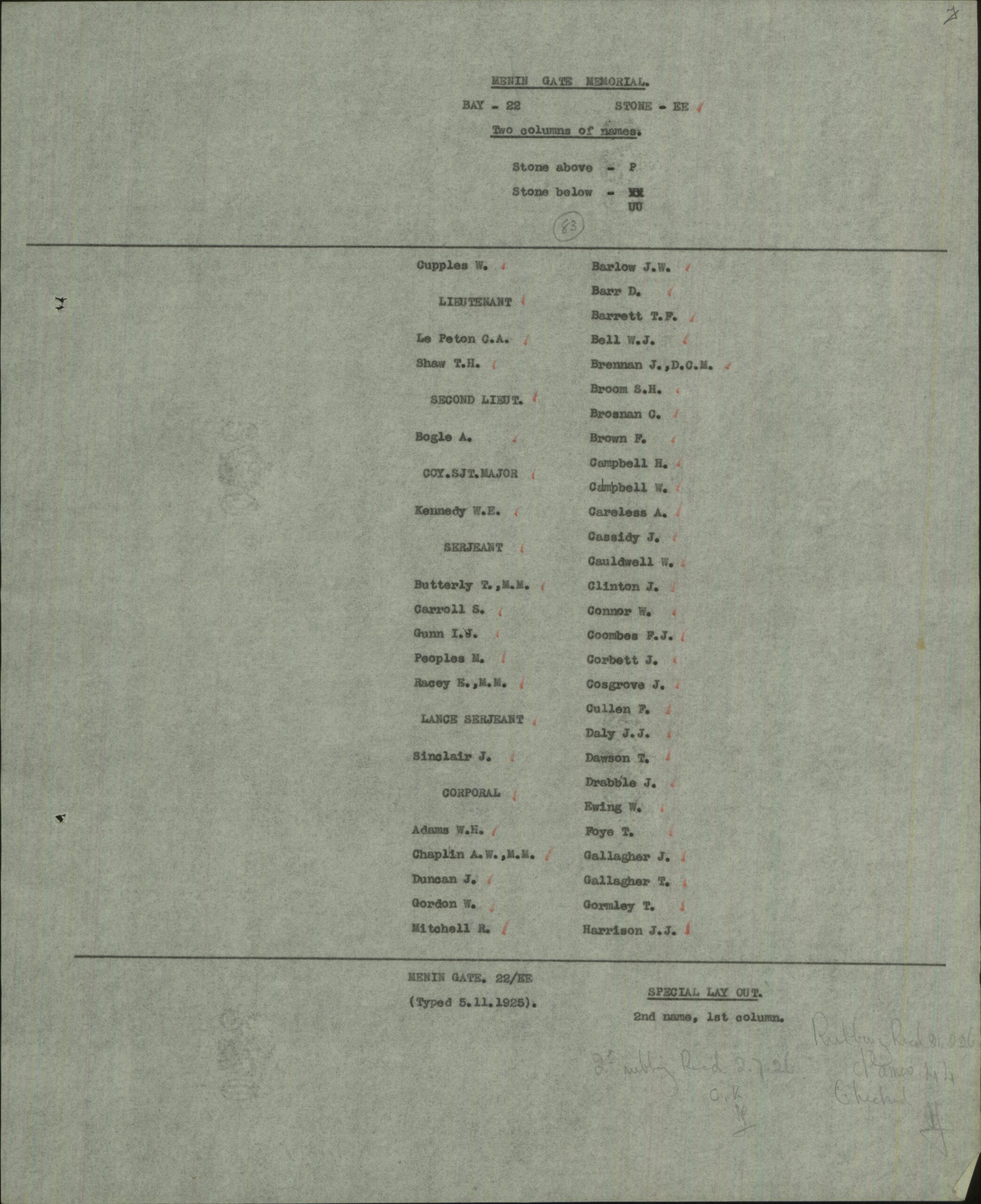
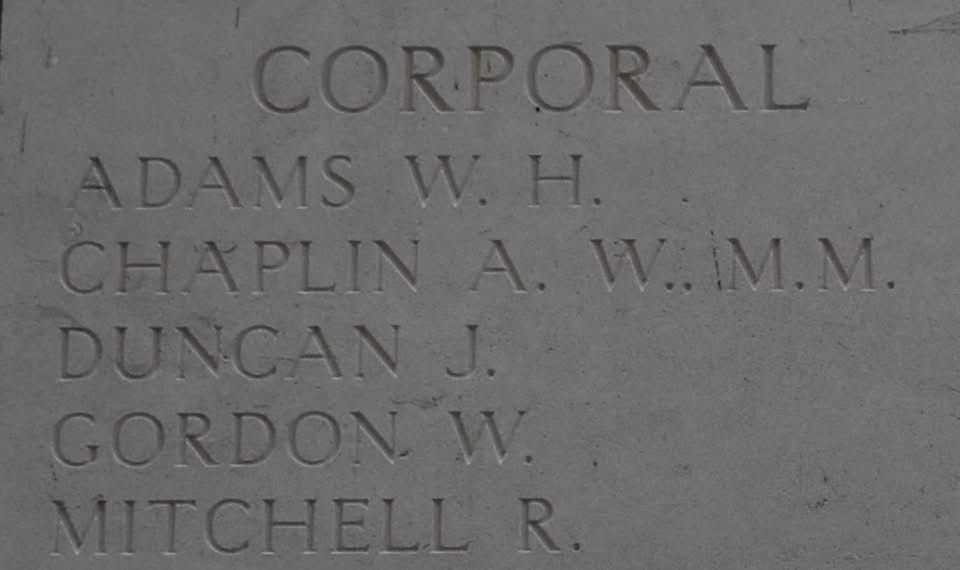
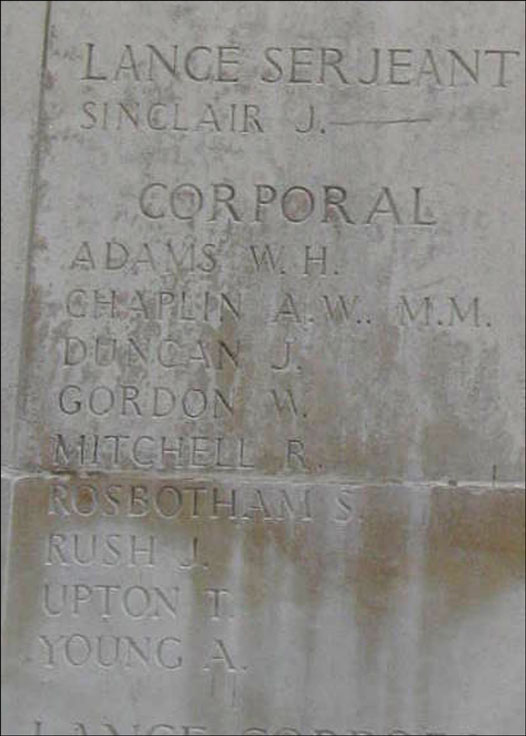
Today, William is remembered for his courage and sacrifice, commemorated on the Menin Gate Memorial at Ypres, among the countless soldiers who gave their lives on the battlefields of the Great War.



-
- LEAD Technologies Inc. V1.01